How to Present Your Technical Project to Non-Technical Stakeholders
Let's get this out of the way: that knot in your stomach before a big stakeholder meeting? Totally normal. Actually, it's good. It means you care. But here's the thing you need to flip in your head. They aren't auditing your code. They aren't looking for a missing semicolon. They're asking one question, and it has nothing to do with your tech stack: "What does this *do* for me?" Your anxiety comes from speaking the wrong language. You're thinking in Python. They're listening in Profit. Money. Time. Risk. That's the translation you need to make. So stop trying to be the smartest person in the (virtual) room. Aim to be the clearest.
Speak Human, Not Jargon

Forget "scalable microservice architecture." Stop saying "paradigm shift." Seriously. These are noise words to your audience. They act like a wall. Your job is to be a bridge. Instead of "We're implementing a React frontend with a GraphQL API," try "We're building a new, much faster way for the sales team to find client information. It's like going from a filing cabinet to a instant search bar." See the difference? One is a feature. The other is a benefit. One is what it *is*. The other is what it *does*. Always, always lead with the "do." The technical details are the backup singers, not the lead vocalist.
The Magic of the Simple Analogy
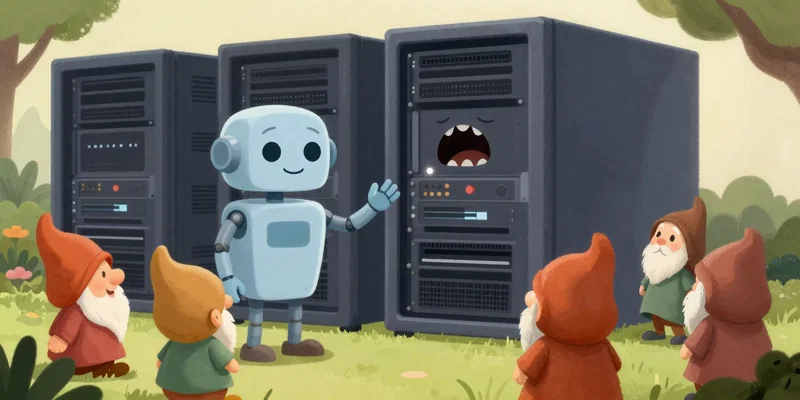
This is your secret weapon. Your brain is full of them. A database isn't a database. It's the digital filing cabinet. The cloud? That's just someone else's computer we rent. Load balancing? Think of it as multiple checkout lanes at a grocery store to prevent one huge line. An algorithm is a recipe. A bug is a typo in that recipe. By grounding the abstract in the everyday, you do two things. You make it understandable. And, way more importantly, you make it *memorable*. When the CEO leaves the meeting, they won't remember your API endpoint. They'll remember the story about the checkout lanes. Give them a story to tell.
Anticipate the "So What?"
Here's where most technical presenters freeze. The dreaded Q&A. The trick isn't to know everything. It's to have already thought about what they'll *really* ask. For every slide, every point, ask yourself the stakeholder's three favorite questions: "How much does this cost?" "How long will it take?" "What's the risk if we do nothing?" Prepare a one-sentence answer for each. If you're talking about a new login system, your prep looks like this: "Cost: Two months of the team's time. Timeline: We aim for QA by October. Risk of doing nothing: The current system is a security liability and frustrates customers, so we're losing trust." Boom. You're not defensive. You're prepared. You sound like a partner, not a programmer.
Your New Default Setting: Confident Clarity
So walk into that next Zoom call differently. Don't see it as a technical defense. See it as a translation session. Your value isn't in the complexity you built. It's in the simplicity you can convey. You're not dumping data on them. You're handing them a map. When you focus on *their* world—their goals, their fears, their bottom line—the anxiety fades. Because you're not the tech person in the corner anymore. You're the guide. And that's a much more powerful place to be.